NGC 6820 and NGC 6823
Also Known as: Sh2-86
Object Type: Reflection Nebula (NGC 6820), Open Cluster (NGC 6823)
Constellation: Vulpecula
Distance from Earth: 6,000 Light Years
Apparent Magnitude: 10.06 (NGC 6820), 7.1 (NGC 6823)
Coordinates: RA 19H 42M 27.92S DEC 23deg 05min 14.7sec
Actual Size: 50 light years in diameter (NGC 6823)
Apparent Dimensions: 40 arc-minutes (NGC 6823)
Discovered by: NGC 6820-NGC6823 was discovered by Albert Marth (1828-1897) in 1864.
Description:
NGC 6820 is a small reflection nebula near the open cluster NGC 6823 in Vulpecula.
The reflection nebula and cluster are embedded in a large faint emission nebula called Sh 2-86. The whole area of nebulosity is often referred to as NGC 6820. M27, the Dumbbell Nebula,
is found three degrees to the east, and α Vulpeculae three degrees to the west.
The most striking feature is the trunk-like pillar of dust and gas protruding from the east side of the nebula towards the open cluster, NGC 6823 in the west.
The center of the open cluster is about two million years old and is predominantly represented by many young, bright blue stars. Outer parts of the cluster intimately involving pillars of emission nebula NGC 6820, contain even younger stars.
The huge pillars of gas and dust are probably formed when surrounding gas and dust is pushed and eroded away by radiation from nearby stars.
Remarkable dark globules of gas and dust are also visible in the nebula, much as is seen in the better-known Eagle Nebula in Serpens or the Lagoon Nebula in Sagittarius.
Open star cluster NGC 6823 is about 50 light-years across and lies about 6,000 light-years away.
The center of the cluster formed about two million years ago and is dominated in brightness by a host of bright young blue stars.
Outer parts of the cluster contain even younger stars. It forms the core of the Vulpecula OB1 stellar association.
Click Below Image(s) for Full Size:
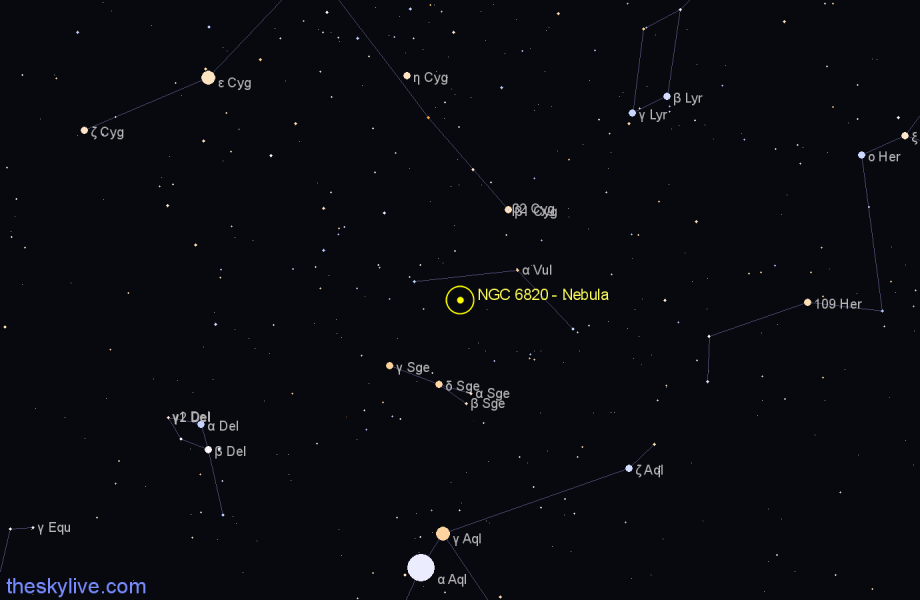
NGC 6820 is situated close to the celestial equator and, as such, it is at least partly visible from both hemispheres in certain times of the year. It is best seen in the summer months.
Platesolve
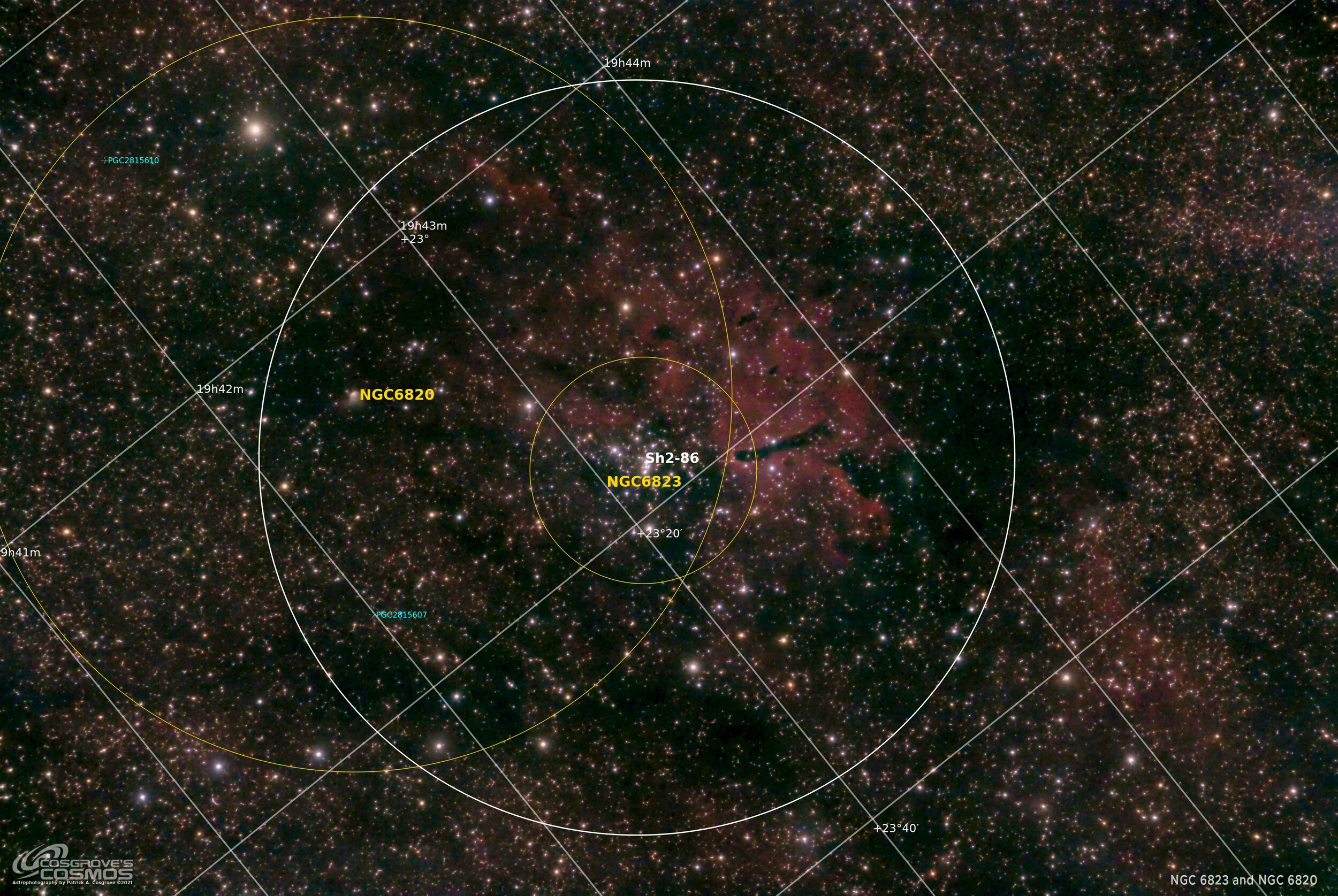
NGC 6820 Nebula and NGC 6823 Open Cluster

Imaging Details
Click to Return to Home Page