NGC 262 and NGC 266
Also Known as: Markarian 348, UGC 499, PGC 2855 (NGC262), UGC 508, PGC 2901 (NGC 266)
Object Type: Spiral Galaxies
Constellation: Andromeda (NGC 262), Pisces (NGC 266)
Distance from Earth: 213.3 million light years (NGC 262), 197 million light years (NGC 266)
Apparent Magnitude: 13.06 (NGC 262), 12.54 (NGC 266)
Coordinates: RA 00H 48M 47.14S DEC 31 deg 57 min 25.085 sec (NGC 262), RA 00H 49M 47.81S DEC 32 deg 16 min 39.807 sec (NGC 266)
Actual Size: 99,249 light years x 93,313 light years (NGC 262), 223,150 light years (NGC 266)
Apparent Dimensions: 2.1 arc minutes x 1.9 arcminutes (NGC 262), 3.0 arcminutes x 2.9 arcminutes (NGC 266)
Discovered by: NGC 262 was discovered on 17 September 1885 by Lewis A. Swift.
NGC 266 was discovered on September 12, 1784, by William Herschel.
Description: NGC 262 (also known as Markarian 348) is a Seyfert 2 spiral galaxy.
NGC 262 was tidally disturbed by the gravitational forces of smaller galaxies, which resulted in a surrounding large cloud over 10 times larger than the Milky Way.
NGC 262 is also a member of the NGC 315 Group (also known as LGG 14), which contains 42 galaxies, including NGC 226, NGC 243, NGC 266, NGC 311, NGC 315, NGC 338, IC 43, IC 66, and IC 69, among others.
NGC 262 is very unusual when compared to a regular spiral galaxy of its type. Similar to Malin 1, it is surrounded by a very huge cloud of neutral hydrogen extending roughly 1,300,000 light-years across, which is probably caused by the tidal stripping of smaller galaxies.
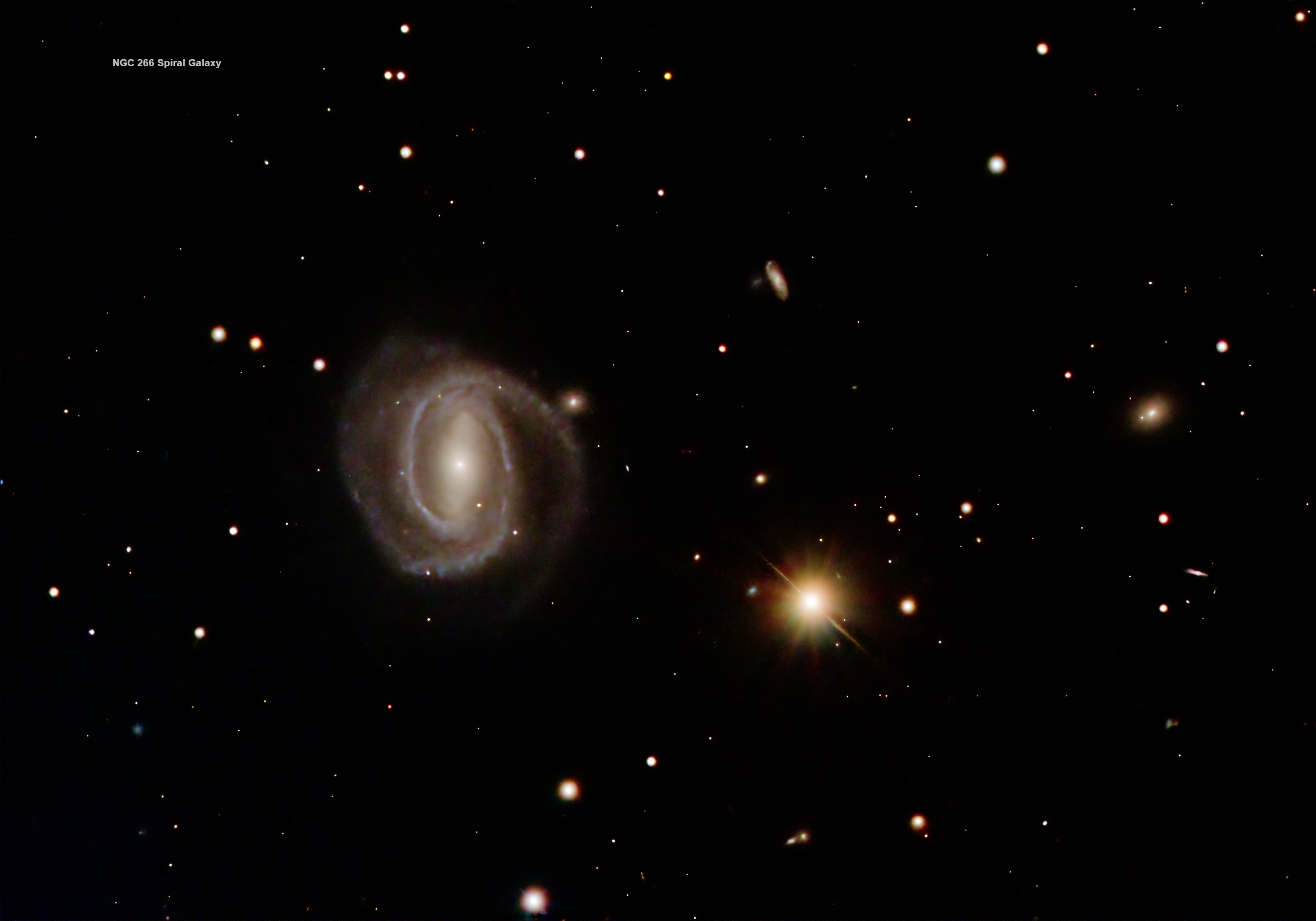
NGC 266 is a massive barred spiral galaxy in the constellation Pisces.
The form of this barred galaxy is described by its morphological classification of SB(rs)ab, which indicates a quasi-ring-like structure (rs) and moderate-to-tightly wound spiral arms (ab).
Two spiral arms are seen to connect to the central bar and can be followed through a complete rotation. The galaxy is at the edge of a massive cloud of neutral hydrogen (HI) which stretches to another galaxy, NGC 262.
Since NGC 262 has much lower amounts of HI than NGC 266, it is speculated that this HI cloud originates from NGC 266.
Click Below Image(s) for Full Size:
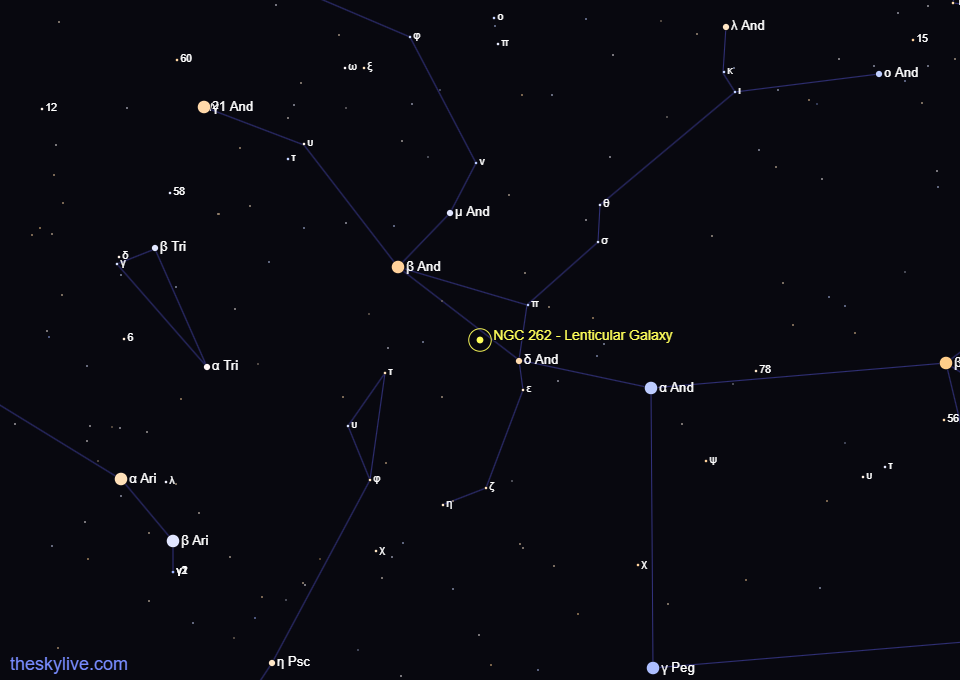
NGC 262 is situated north of the celestial equator and, as such, it is more easily visible from the northern hemisphere.
Given its visual magnitude, NGC 262 is visible with the help of a telescope having an aperture of 10 inches (250mm) or more.
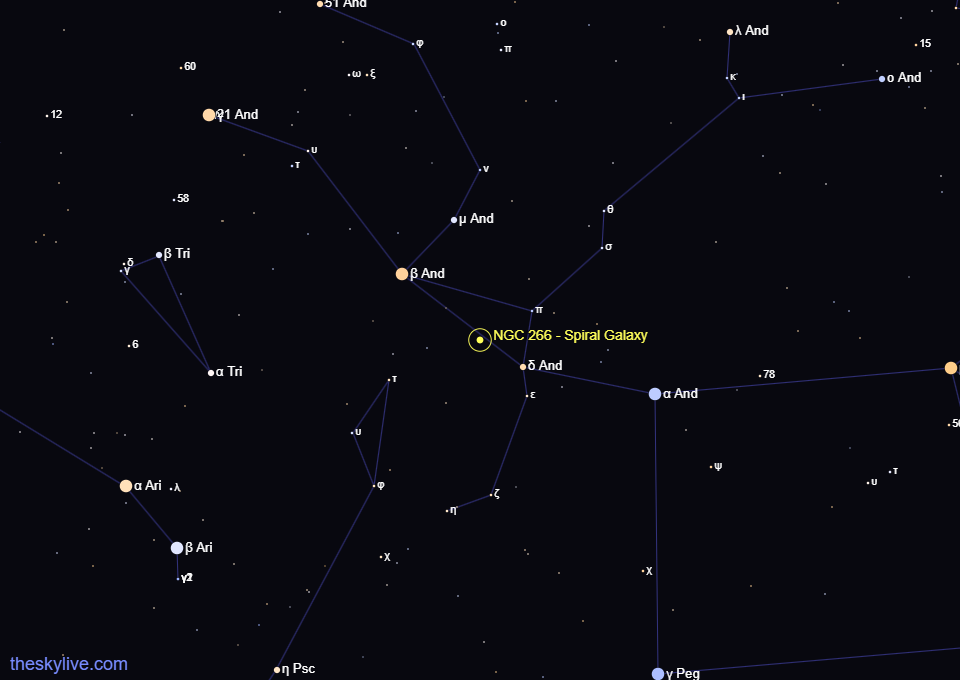
NGC 266 is a Spiral Galaxy in the Pisces constellation. NGC 266 is situated north of the celestial equator and, as such, it is more easily visible from the northern hemisphere.
Given its visual magnitude, NGC 266 is visible with the help of a telescope having an aperture of 8 inches (200mm) or more.
Platesolve
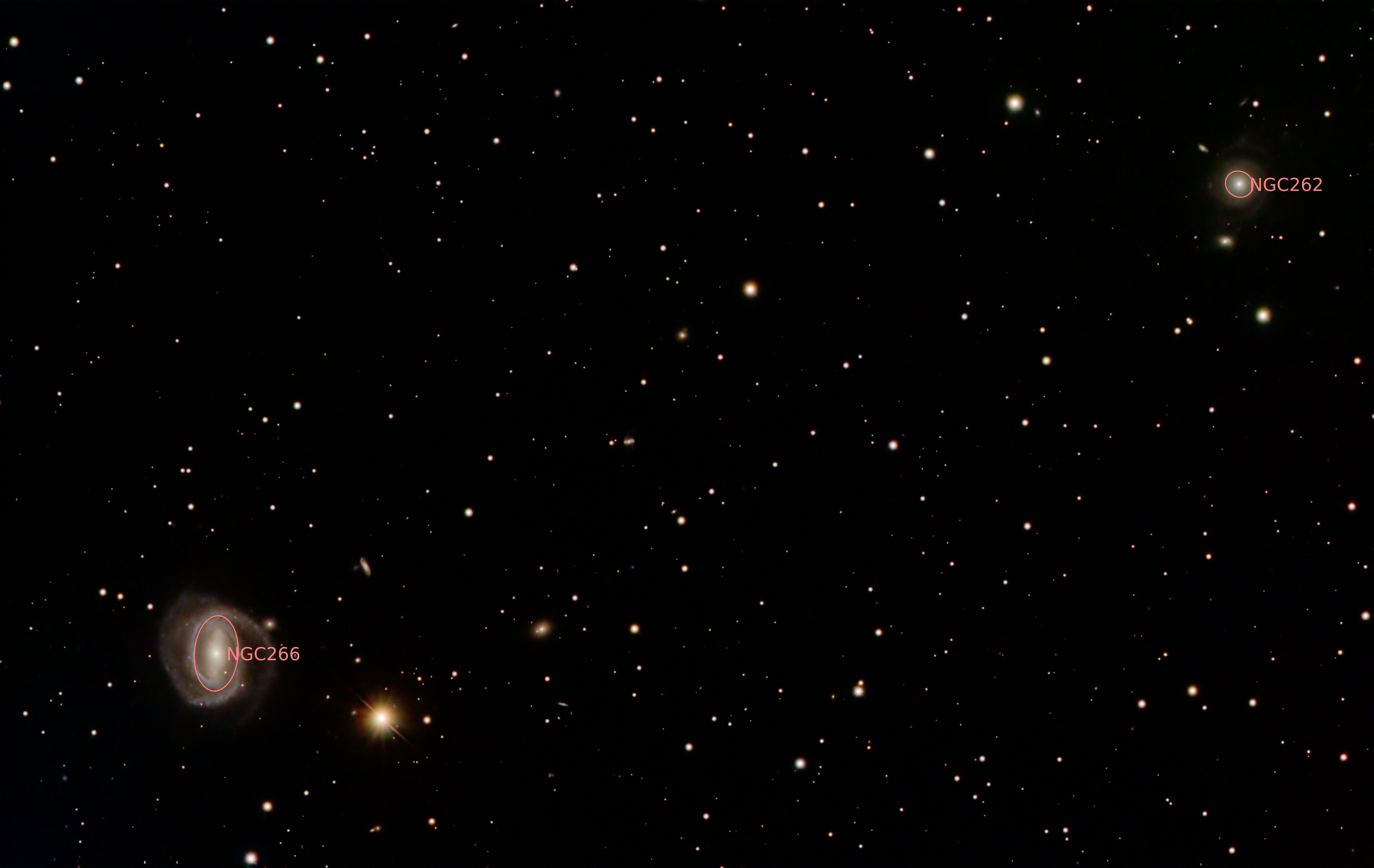
NGC 262 & NGC 266 Spiral Galaxies

NGC 266 Spiral Galaxy
Imaging Details
Click to Return to Home Page