Ursid Meteor Shower 2025
Constellation: Ursa Major
Origin: Comet 8P/Tuttle
Velocity: 20.7 miles (33 kilometers) per second
Active Dates: Dec 17 - Dec 26 (Peak Dec 22)
Rate: About 10 meteors per hour
Description: 8P/Tuttle is the comet responsible for the Ursid meteor shower.
Pierre Mechain discovered it on January 9, 1790, from Paris, France. Mechain, an associate of Charles Messier, discovered seven comets that bear his name.
But he also discovered two more comets that do not. One, later named Comet Encke after Johann Encke, who calculated its orbit,
is responsible for the Southern Taurids meteor shower in early November.
The other comet Mechain found that does not bear his name is this one, 8P/Tuttle.
The annual Ursid meteor shower runs from about December 13 to 24 every year.
It always peaks around the December solstice, which, in 2025, happens at 15:03 UTC on December 21. The Ursids peak on the morning of December 22.
This low-key meteor shower – which always peaks around the solstice – is somewhat overlooked due to the holiday season.
Ursid meteor shower hourly rate – about 5 to 10 meteors per hour – is lower than that of the Geminid shower,
which peaked over a week before. However, it’s had an occasional outburst of 100 meteors per hour.
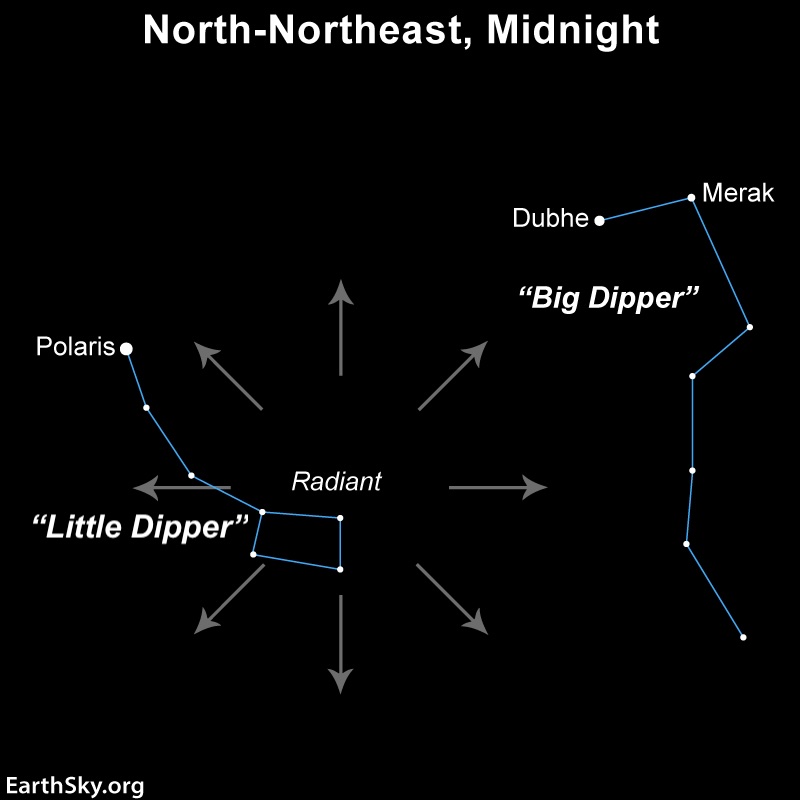
All meteors in annual showers have radiant points; the showers typically take their names from the constellations in which their radiant lies.
If you trace the paths of the slow-moving Ursid meteors backward, they appear to come from the section of sky marked by the Little Dipper star Kochab.
Circumpolar at northerly latitudes. Due to the northern location of the radiant point in the sky, these meteors are not well seen from southern latitudes and the Southern Hemisphere.
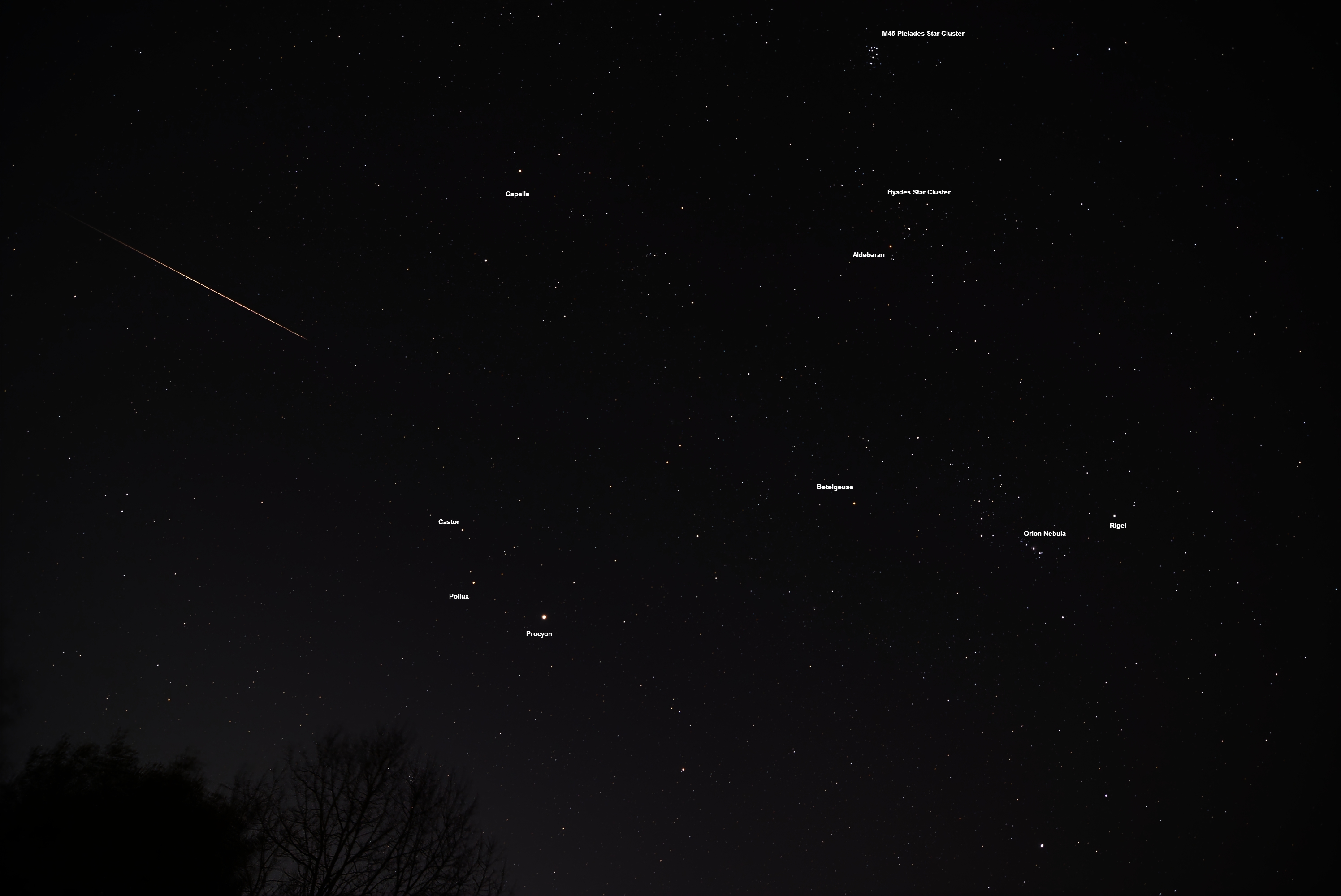
This wide field image shows a single meteor as well as the Pleiades Open Cluster, the Hyades Star Cluster, and Orion Nebula
Click Below Image(s) for Full Size:
Perseid Meteor Shower Radiant
Ursid Meteor

Imaging Details
Click to Return to Home Page