Eta Aquarid Meteor Shower 2026
Constellation: Aquarius
Origin: 1P Halley
Velocity: 40.7 miles (65.4 kilometers) per second
Active Dates: April 20 to May 21, 2025 (Peak night: May 5-6)
Rate: About 10 meteors per hour
Description: Unlike most major annual meteor showers, there is no sharp peak for this shower,
but rather a broad maximum with good rates that last approximately one week centered on May 5.
The Eta Aquariid meteor shower was the first to be linked to Halley's comet and is usually two to three times stronger than the October Orionids.
Eta Aquarid meteors are known for their speed, with the meteors traveling at about 40.7 miles (65.4 kilometers) per second into Earth's atmosphere.
Fast meteors can leave glowing "trains" (incandescent bits of debris in the wake of the meteor) which last for several seconds to minutes.
About 50 meteors can be seen per hour during the peak of the Eta Aquarids.
The Eta Aquarids are viewable in both the Northern and Southern hemispheres during the pre-dawn hours.
The Southern Hemisphere is preferable for viewing the Eta Aquarids.
The Northern Hemisphere has an hourly rate of only about 10 meteors. This is due to the viewing location of the radiant from different latitudes.
The constellation of Aquarius – home to the radiant of the Eta Aquarids – is higher up in the sky in the Southern Hemisphere than it is in the Northern Hemisphere.
In the Northern Hemisphere, Eta Aquarid meteors can more often be seen as "Earthgrazers." Earthgrazers are long meteors that appear to skim the surface of the Earth at the horizon.
The pieces of space debris that interact with our atmosphere to create the Eta Aquarids originate from comet 1P/Halley.
Each time that Halley returns to the inner solar system its nucleus sheds a layer of ice and rock into space.
The dust grains eventually become the Eta Aquarids in May and the Orionids in October if they collide with Earth's atmosphere.
Their radiant – the point in the sky from which the Eta Aquarids appear to come – is the constellation Aquarius, the water bearer.
One of the brightest stars within Aquarius is called Eta Aquarii, and these meteors appear from this area of the constellation. (Eta Aquarii is one of the four stars that make up the top of the "water jar.")
This star and the constellation is where we get the name for this shower: Eta Aquarids.
Click Below Image(s) for Full Size:
Eta Aquarid Meteor Shower Radiant
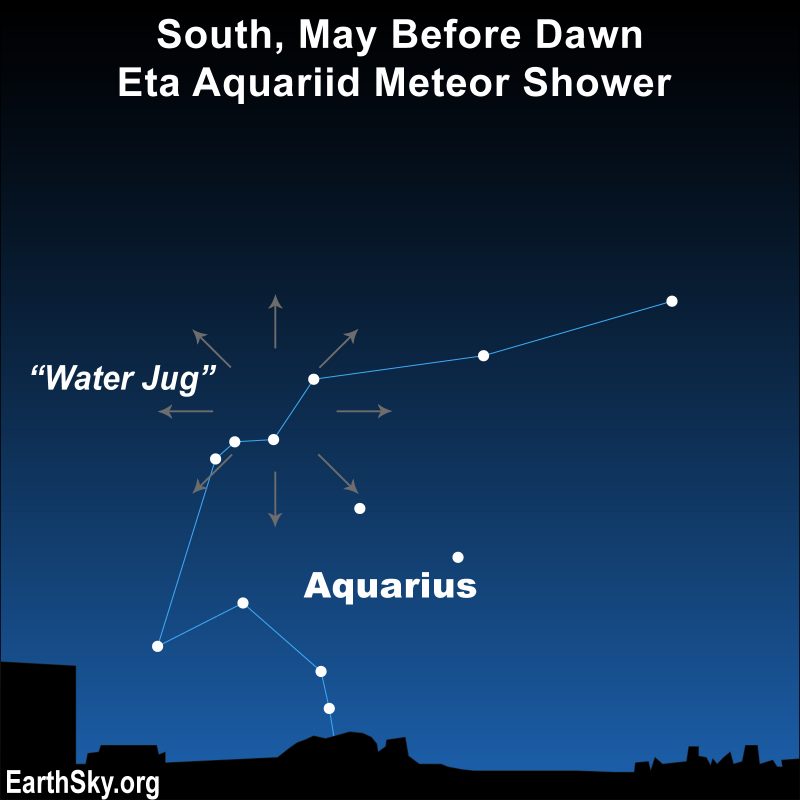
Eta Aquarid Meteor Shower
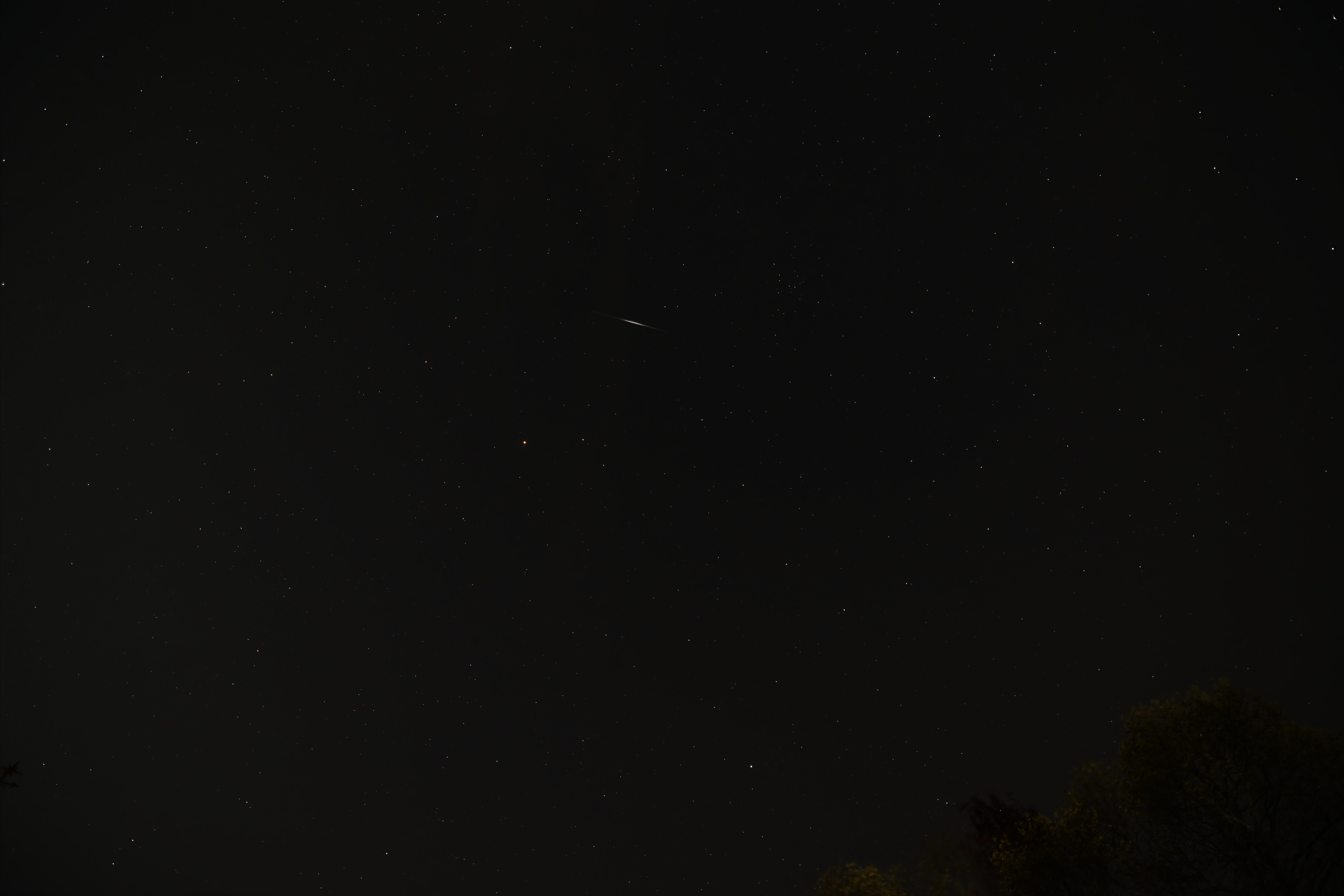
Eta Aquarid Meteor Shower closeup
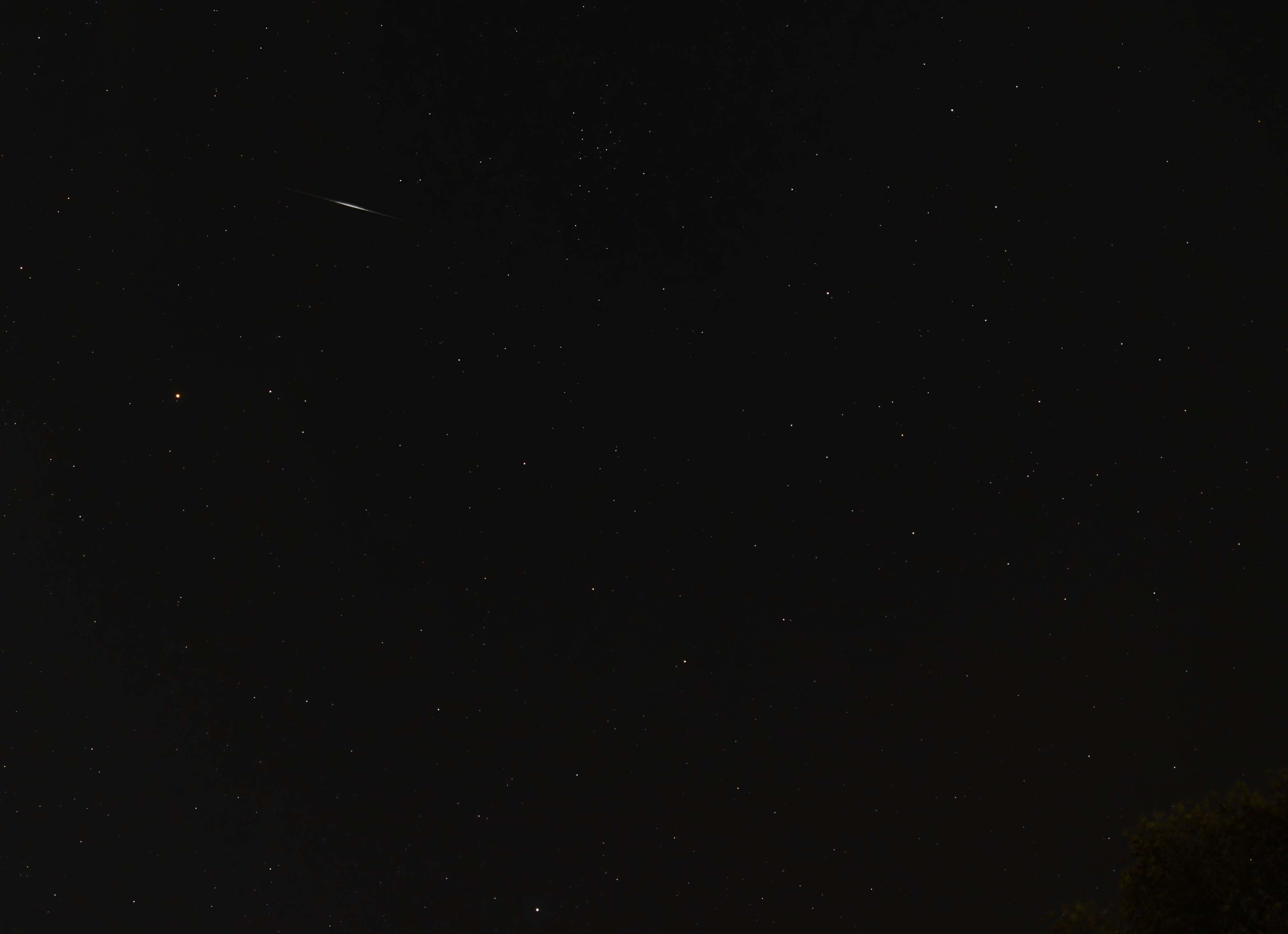
Eta Aquarid Meteor Shower
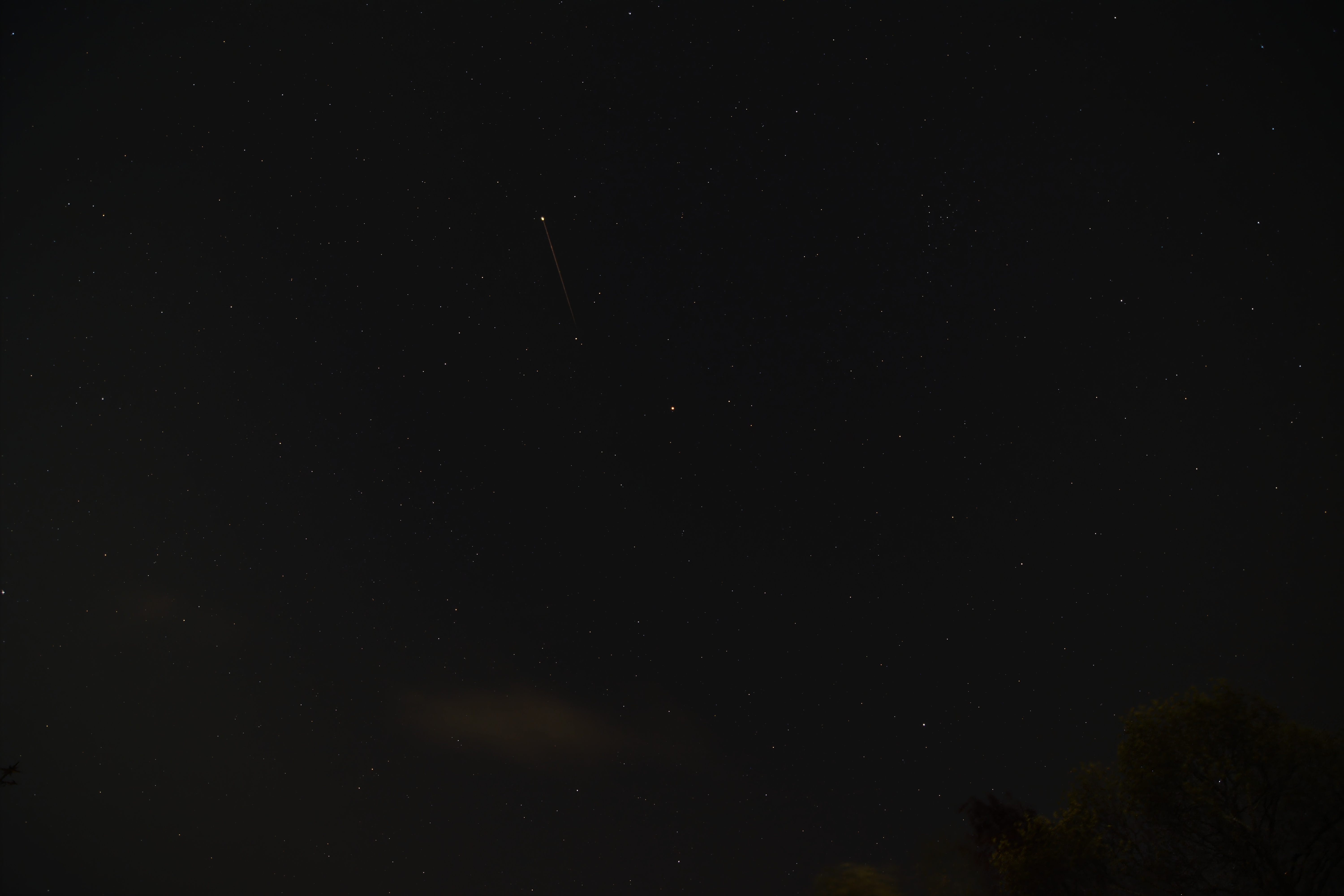
Eta Aquarid Meteor Shower closeup

Imaging Details
Click to Return to Home Page