Conjunction of Jupiter & Venus June 2026
Conjunction Background: Occasionally, two or more objects meet up with each other in our sky.
Astronomers use the word conjunction to describe these meetings. The word conjunction comes from Latin, meaning to join together.
In astronomy, a conjunction occurs when two astronomical objects or spacecraft appear to be close to each other in the sky.
This means they have either the same right ascension or the same ecliptic longitude, usually as observed from Earth.
When two objects always appear close to the ecliptic—such as two planets, the Moon and a planet, or the Sun and a planet—this fact implies an apparent close approach between the objects as seen in the sky.
A related word, appulse, is the minimum apparent separation in the sky of two astronomical objects.
Conjunctions involve either two objects in the Solar System or one object in the Solar System and a more distant object, such as a star. A conjunction is an apparent phenomenon caused by the observer's perspective: the two objects involved are not actually close to one another in space.
Conjunctions between two bright objects close to the ecliptic, such as two bright planets, can be seen with the naked eye.
You can keep up to date with upcoming conjunctions by visiting 'Earthsky.org'
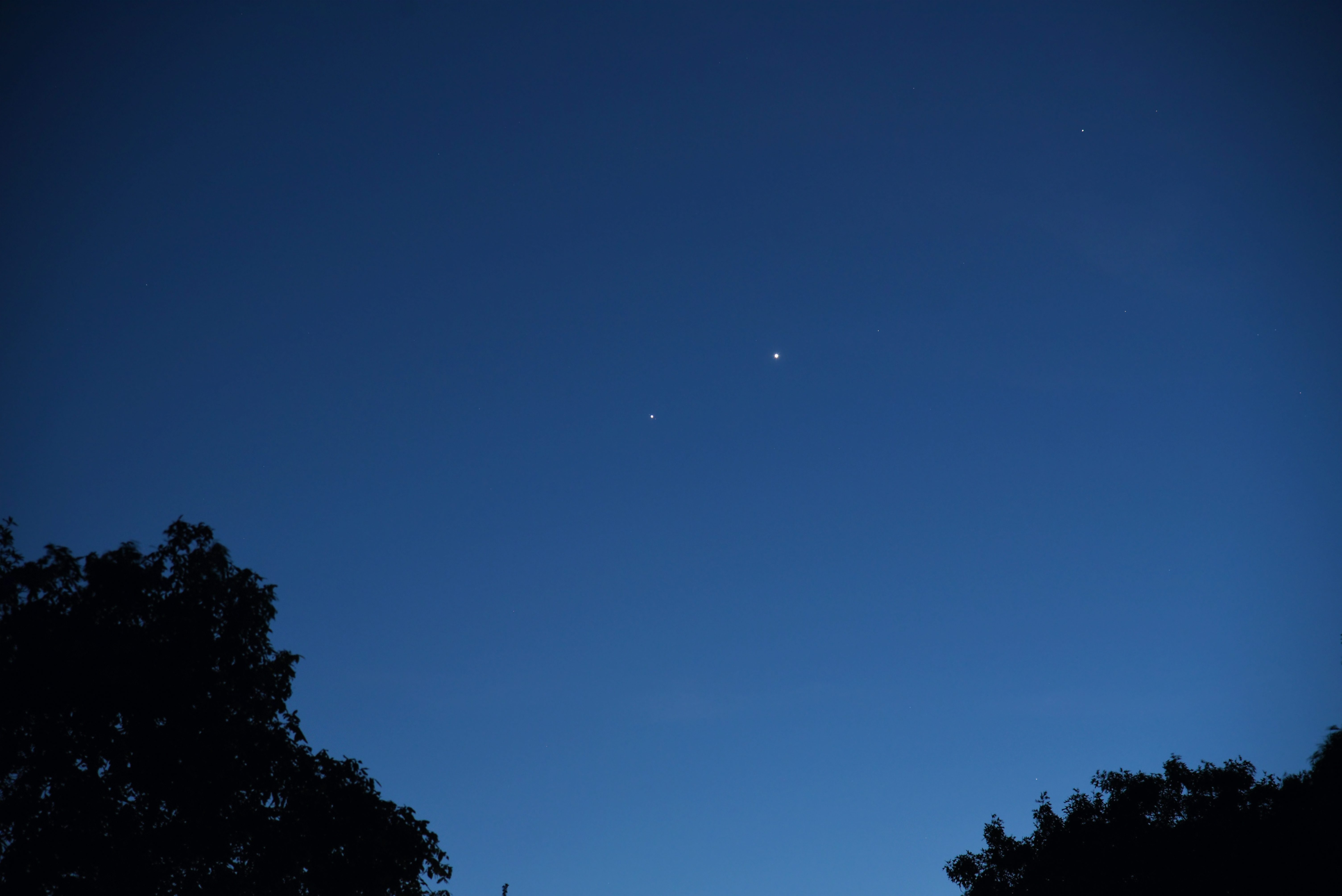
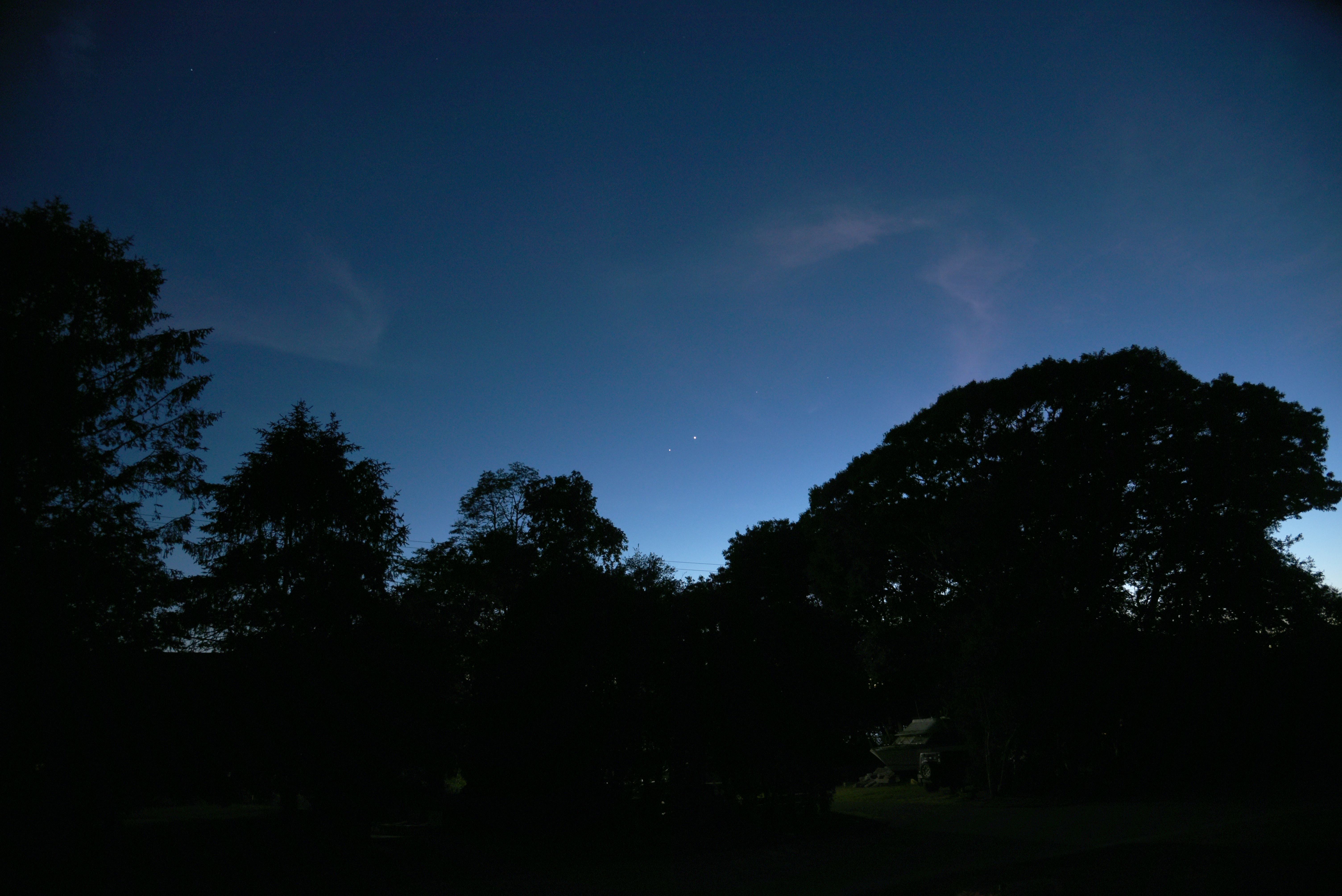
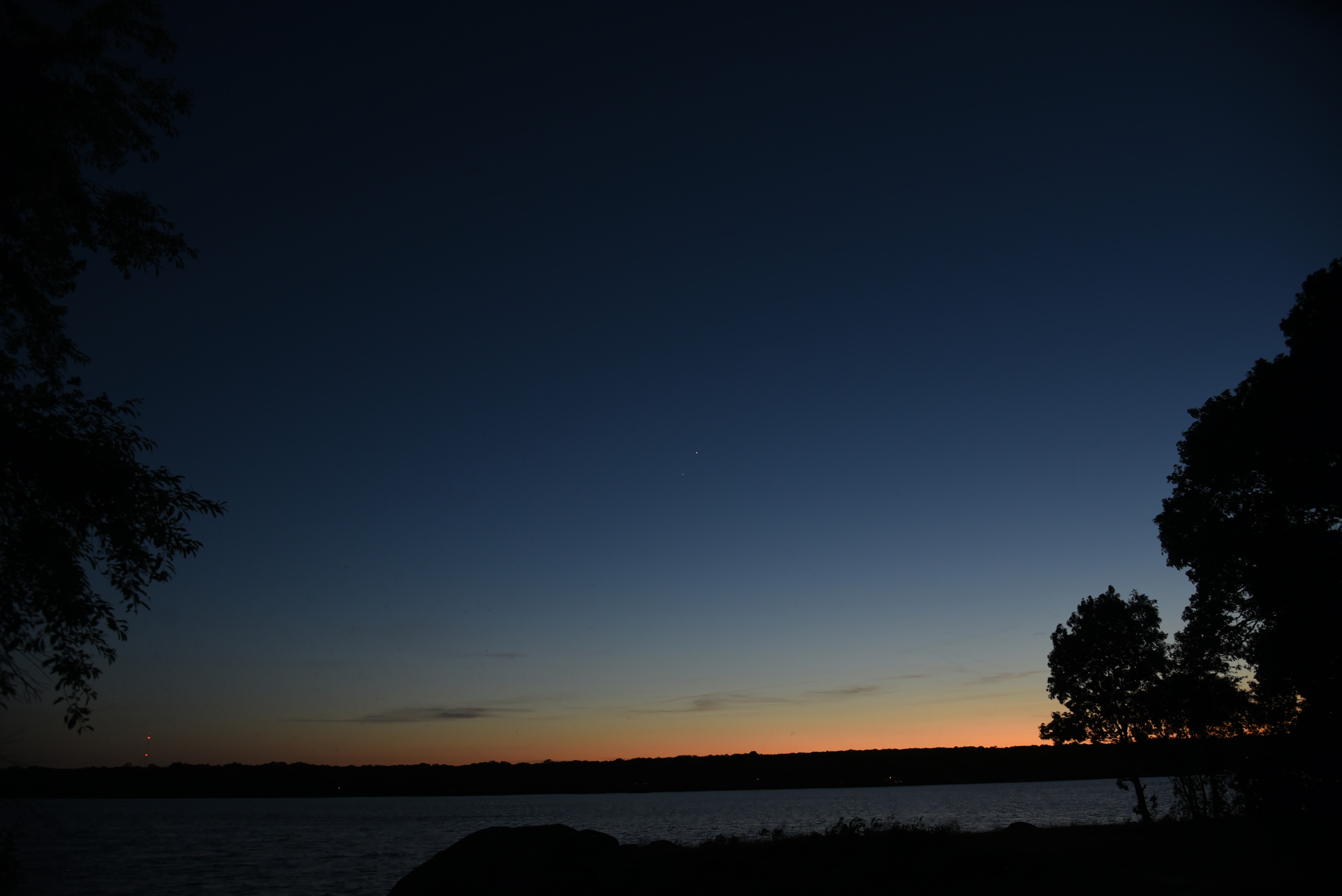
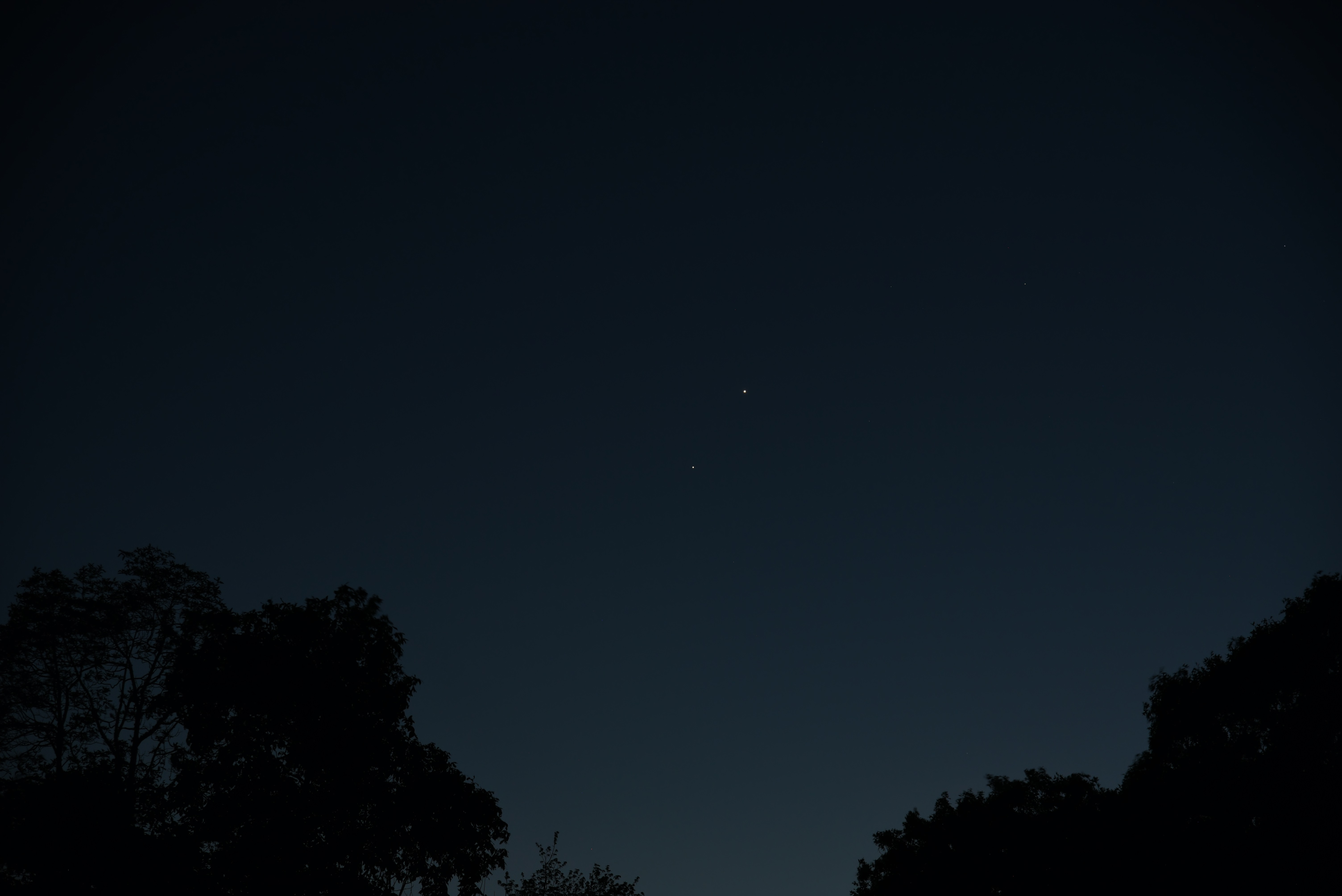
Description: On June 8 and June 9 Venus and Jupiter were separated by less than 2 degrees in the night sky — close enough to share the field of view of a pair of 10x50 binoculars.
The planets will be separated by about 1.5 degrees – about the width of three full moons. They will be low to the horizon.
You may also be able to spot Jupiter's four Galilean moons — Io, Europa, Callisto and Ganymede — appearing as tiny star-like points of light surrounding the gas giant., Venus was be 0.2 degrees south of Jupiter.
Venus is the easier of the two to spot. It is the brilliant "evening star", blazing at a magnitude of about –4.0. Jupiter is fainter, but still bright at about magnitude –1.9.
Both planets are currently situated in Gemini, the twins, although the stars of the constellation will only become visible as the sky darkens and the tableau slips even closer to the horizon.
The constellation's two brightest stars, Castor and Pollux, will be the first stars to shine through.
Binoculars help separate these two worlds in their bright planetary glare. Even though Venus and Jupiter appear next to each other in the sky, they are really nowhere near each other in space.
They are separated by 430 million miles (690 million km), or nearly five times the Earth–sun distance!
Shortly after sunset, brilliant Venus will still be near bright Jupiter, forming a dazzling duo," EarthSky.com stated. "At this point, the conjunction is over, and Venus has begun its ascent away from Jupiter.
Venus will get higher in the west after sunset over the coming weeks.
Meanwhile, Jupiter will head toward Mercury and the sunset. It'll disappear into the sunset glare by July.
Conjunction of Jupiter & Venus June 8, 2026
Conjunction of Jupiter & Venus June 9, 2026
Imaging Details
Click to Return to Home Page