Caldwell 17
Also Known as: NGC 147
Object Type: Dwarf Spheroidal Galaxy
Constellation: Cassiopeia
Distance from Earth: 2.56 million Light years
Apparent Magnitude: 10.5
Coordinates: RA 00H 33M 12.1S DEC 48 deg 30 min 32 sec
Actual Size: 4,400 light year in diameter
Apparent Dimensions: 13.2 arc-minutes x 7.8 arc-minutes
Discovered by: NGC 147 was discovered by John Herschel in September 1829.
Description: NGC 147 is a member of the Local group of galaxies and a satellite galaxy of the Andromeda Galaxy (M31).
Just as the planets in the solar system are gravitationally bound to the Sun, so are these smaller galaxies bound to their much more massive galactic host.
While many classes of galaxies can exist as satellites, dwarf spheroidal galaxies like NGC 147 have been observed in this role more frequently than any other type of galaxy.
NGC 147 forms a physical pair with the nearby galaxy NGC 185, another remote satellite of M31. The last significant star-forming activity in NGC 147 occurred around 3 billion years ago.
NGC 147 lies 300,000 light-years from M31, which is roughly twice the distance between the Large Magellanic Cloud and our Milky Way galaxy.
Dwarf satellite galaxies tend to appear very diffuse and dim, so they can be difficult to spot.
NGC 147 contains a large population of older stars which show a spread in metallicity and age.
Click Below Image(s) for Full Size:
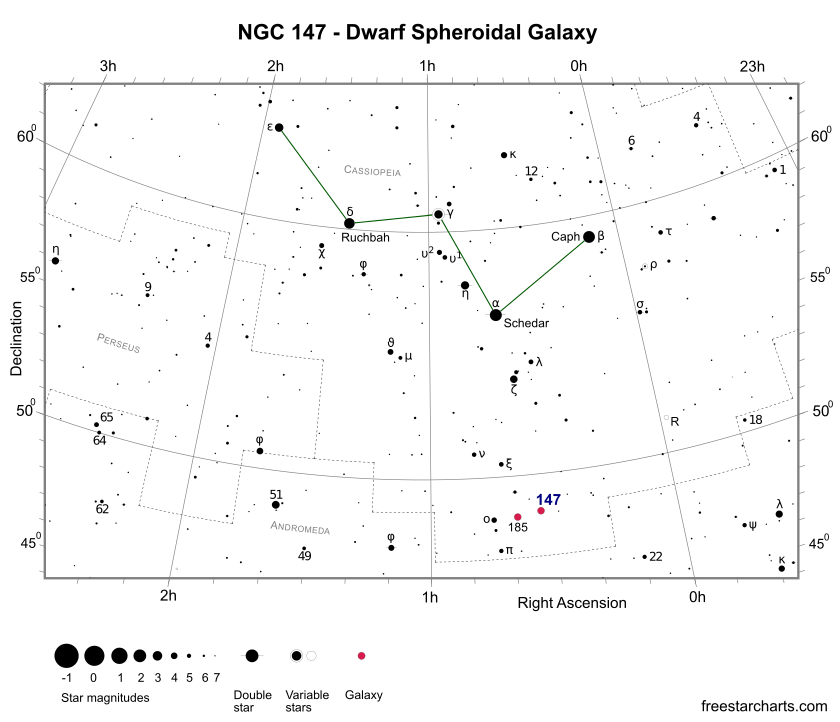
Visually it is both fainter and slightly larger than NGC 185.
NGC 147 is more difficult to see than NGC 185, which is visible in small telescopes.
Best observing time is in the months July through January, when this circumpolar constellation is highest in the sky.
Platesolve
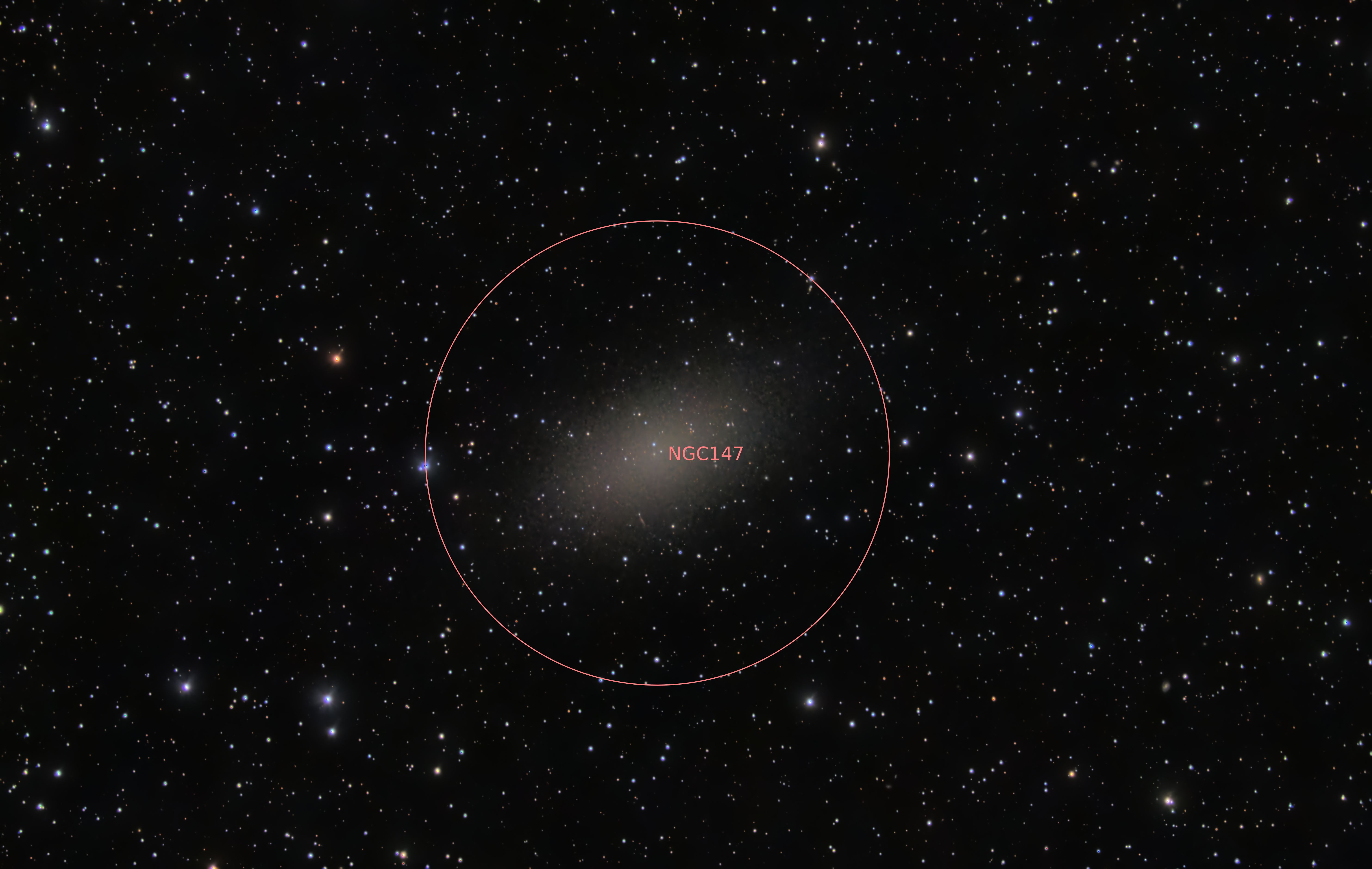
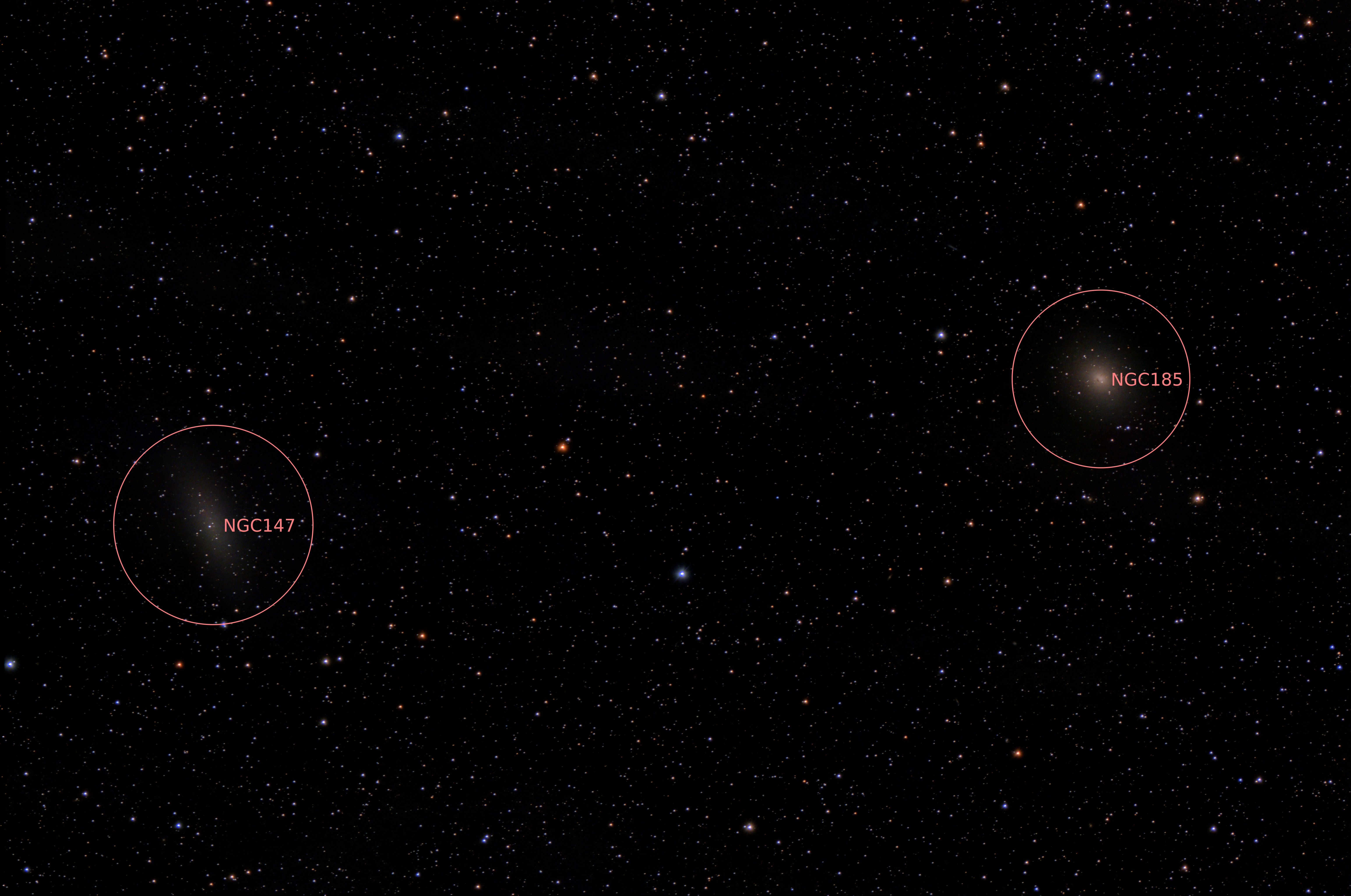
NGC 147 Galaxy

Imaging Details
Click to Return to Home Page